Module 4: Symbolism in Art
Symbolism in art can be very impactful. For this module, we will be focussing on how we can use symbolism in art to respond to and understand environmental and global issues.
Essential Questions
- What is symbolism?
- Why is symbolism used in art?
- How can I use symbolism to represent my own ideas or perspectives on an environmental or global issue(s)?
BC Curricular Connections
Big Ideas:
- Artists often challenge the status quo and open us to new perspectives and experiences.
Curricular Competencies:
- Use the arts to communicate, respond to and understand environmental and global issues.
Content:
- Symbolism and metaphor to explore ideas and perspective.
Learning Objectives
Remember and Understand
- I can define symbolism.
- I can identify examples of symbolism in artworks.
Apply
- I can use symbols to represent my own ideas or perspectives on an issue.
Create
- I can design an original artwork that uses symbolism to communicate an environmental or global issue(s).
Evaluate
- I can defend my use of symbolism in my artwork.
- I can critique others’ use of symbolism in their artwork.
Assessment Plan (Based on British Columbia Proficiency Scale)
Formative
- After reviewing examples of symbolism in artworks, there will be two artworks where you will have to identify how symbolism is used. You will submit your responses using a google form attached in Part 1. Your response will be automatically marked and you will therefore receive immediate feedback on your level of understanding.
- After reviewing the module content, you are required to email me with a definition of symbolism in your own words, your chosen environmental issue, your mind map and rough sketch, and a few examples of how you will incorporate symbolism in your final art. This can be a written submission or an audio file. I will provide you feedback before you start your final art.
Summative (please see the rubric for all summative activities)
- You will complete a final art piece that uses symbolism to communicate an environmental or global issue(s). When you submit your art, you will also submit a short reflection on the environmental issues addressed as well as where symbolism is present and why it was used. This can be a written reflection or an audio file. Please follow the rubric.
- During our end-of-week Zoom call, you and your group members will be required to share your art with each other. You must complete a peer-evaluation for each of your three group members using the assignment rubric. This is for you and your peers to improve your work before the submission deadline, and also for me to see that you are able to complete the ‘evaluate’ section of the learning objectives. Please follow the rubric.
Part One (1 hour)
*Please have Part 1 content finished by Tuesday at 2:30 so you can email me before the deadline*
Introduction (5 minutes)
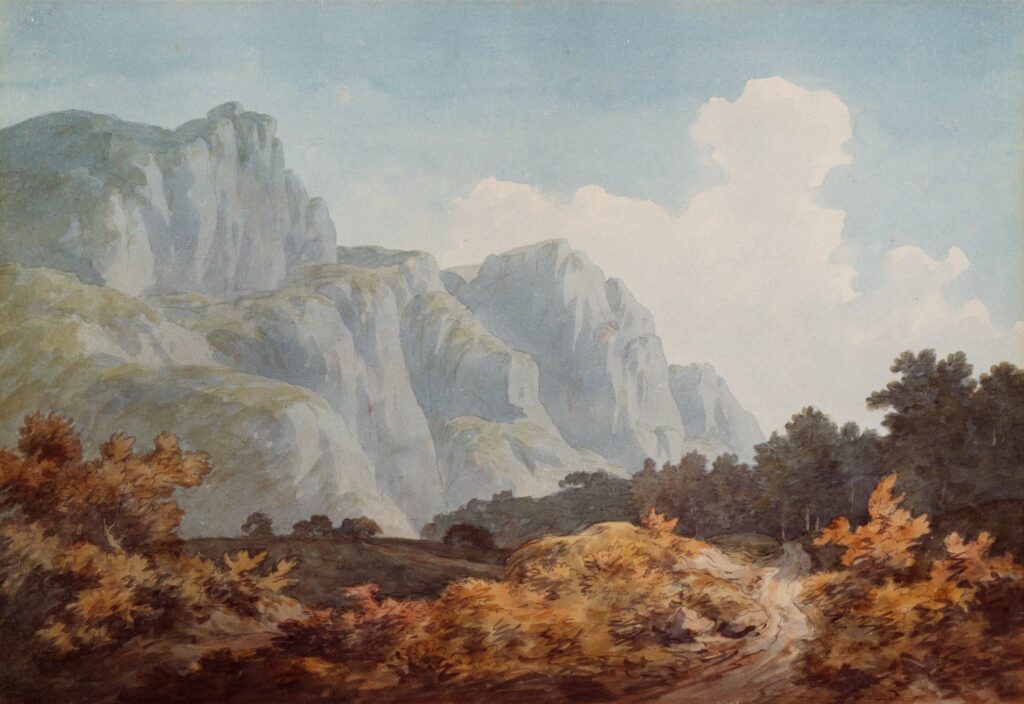
Photo by John Warwick Smith on Unsplash
In this lesson, you will learn how artists use symbolism to express ideas and emotions in creative ways. Symbolism is when an artist uses objects, colours or images to represent something deeper. For example, a single tree might stand for life or growth, while a broken bottle could symbolize pollution or waste. Through symbols, artists can tell stories, share beliefs and make people think about important issues, without saying a single word.
This module will focus on how symbolism can be used to explore environmental issues. Many artists today use their art to talk about the world around them, especially about problems that affect nature and the environment. You will see how art can raise awareness about climate change, deforestation, pollution and the need to protect our planet. Art doesn’t just show what is happening, it can inspire people to take action and imagine a better future.
You’ll begin this module by watching a few short videos that explain how artists use symbolism in their work. As you watch, try to notice how different symbols carry meaning and how they make you feel. Next, you’ll look at pictures of artworks that use symbolism to express messages about the environment or social issues. Pay attention to what stands out to you like the colours, the materials, the emotions and the message each artwork is be sending. Then, you will look at two images that do not have a description, and you’ll take a short online survey to reflect on where you think symbolism is present in the artwork. Don’t worry, this survey is just for you and I to check your understanding and make sure you’re on the right track before you start your poster project. Then, you’ll review the poster project rubric, which will guide you in creating your own symbolic artwork later in the module.
Finally, you’ll spend some time brainstorming your ideas. Think about what environmental issue matters most to you. Is it ocean pollution? Deforestation? Climate change? Once you’ve chosen your topic, start thinking about what symbols could represent it. What colours or images could express your message clearly? What emotion do you want your artwork to make people feel?
By the end of this module, you’ll understand how artists use symbolism to communicate powerful ideas and how you can do the same. You’ll learn that art is not just about creating something beautiful; it’s about expressing what’s important to you and inspiring others to care about the world we share.
Before you move on, pause and think: Has there ever been a time when a piece of art (a painting, a song, a movie or even a poster) made you feel something strongly? What was it about the artwork that affected you? The colours? The message? The subject?
Think about that experience as you begin this module. Just like that artist made you feel something, you’ll be learning how to use symbolism in your own art to make others feel and think deeply, especially about important environmental issues.
Short Informative Videos (15 minutes)
Watch these two short videos below about symbolism and colour, observe artworks that raise awareness about environmental issues and reflect on how art can inspire change.
Pictures of Art Using Symbolism With Descriptions (5 minutes)
Examine these three images and read the symbolism descriptions that go with them. As you look closely, consider how each visual element helps communicate the deeper meaning of the artwork. Think about how the objects, colours, shapes, and actions in the images might represent larger ideas, issues, or messages.
Symbolism:
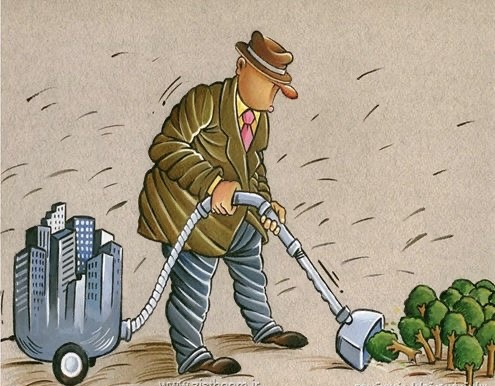
This picture shows how cities and human growth can destroy nature. The man believes he is cleaning, but in reality he is removing life from earth. This is a message about how building too much can take away natural spaces and harm the planet.
Image Credit:
Hamid Soufi, Environmental cartoon illustration, Zisooom, Source: Pinterest.
Symbolism:
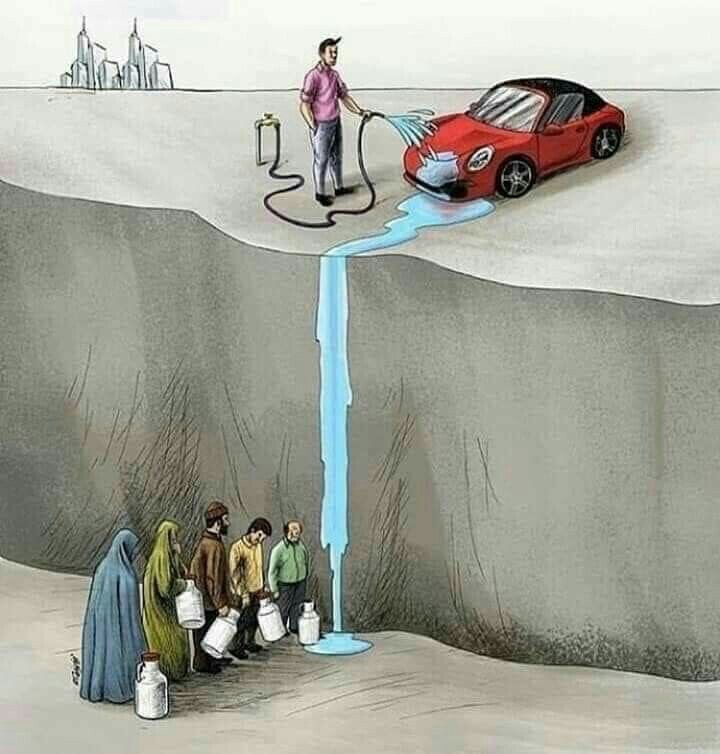
This picture shows that pollution and wasting resources often harm poorer people the most. It’s a reminder that we often take advantage of what we have and that our actions affect people everywhere, especially those with fewer resources.
Image Credit:
(Untitled image) Source: Pinterest (original creator unknown).
Symbolism:
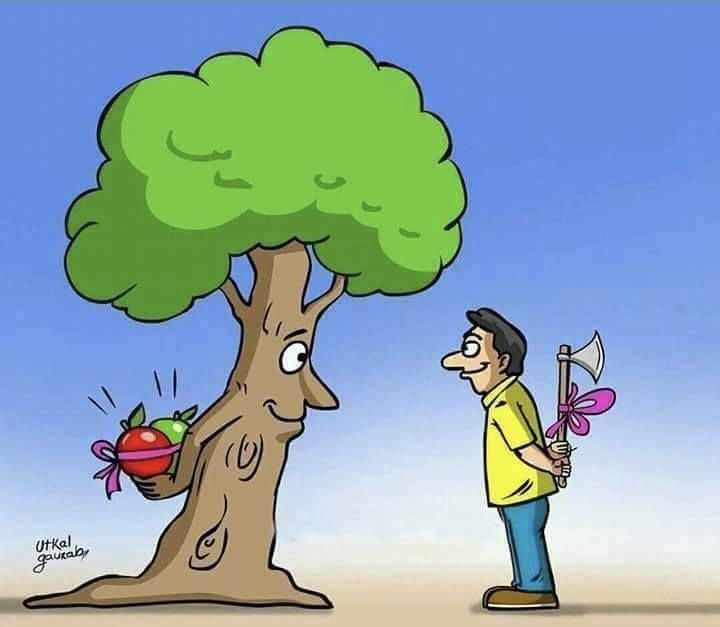
This image shows that humans often harm nature without considering what it provides us. The tree, symbolizing nature, only offers gifts, while the man, symbolizing humans, returns the favour with destruction.
Image Credit:
Utkal Gourab. (Untitled image). Instagram @utkal_gaurab. Source: Pinterest.
Picture of Art Using Symbolism Without Description (5 minutes)
Now that you’ve learned a bit about how artists use symbolism, it’s your turn to see what you understand!
Before you start please read ALL the steps below:
- Don’t stress! This isn’t for marks, it’s just to help you (and me) see what you know.
- Open the Google Form link below.
- Type in your first name and last initial (e.g., Abigail H).
- Look carefully at the first picture and select all the symbolism statements that match.
- Then look at the second picture and select all the symbolism statements that match.
- Click Submit when you’re done.
- Take a moment to review your answers and think about what you did well and what you might need to understand further.
Now that you have read ALL the steps above, click the image below to access the google form.

Review the Rubric (5 minutes)
Click on the picture below to open the rubric. The poster can be any size and can be done digitally or by hand, but needs to be readable, neat, and follow the rest of the criteria from the rubric. The use of AI to create your art will not be accepted. Your reflection can be written or oral.

Brainstorm Ideas for your Poster (20 minutes)
Before you start creating your symbolic artwork, spend some time exploring and organizing your ideas. Here is a list of steps to help you begin.
Step 1: Choose Your Environmental Issue
Pick one issue you care about:
• Ocean pollution
• Plastic waste
• Deforestation
• Climate change
• Endangered species
• Wildfires
• Water scarcity
• Or another environmental issue that matters to you
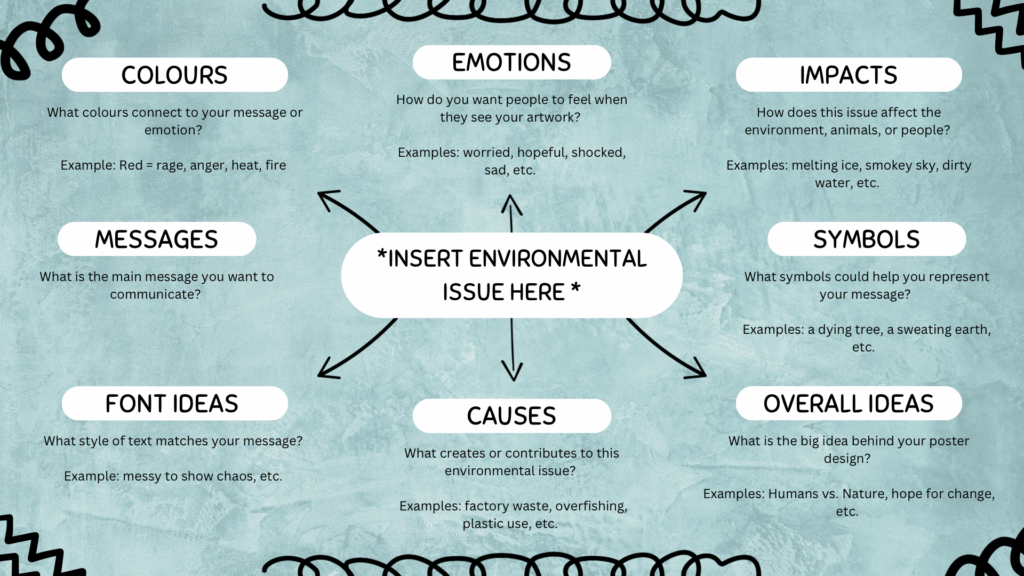
Step 2: Create a Mind Map
Use a mind map to explore your ideas. Put your chosen environmental issue in the centre and add the branches as shown in the example on the right.
Important Note: Your mind map layout does not need to look exactly like this. Please understand that this is a guide to support you while you think of what to include for your poster.
Step 3: Sketch a Rough Draft
Draw a quick, simple sketch of your ideas before moving on to your final poster copy.
Email Teacher (5 minutes)
*Due by Tuesday at 2:45, but if you finish earlier, you will have more time to work on your art*
Now that you have finished the module content and understand how and why symbolism is used, please email me with a definition of symbolism in your own words, your chosen environmental issue, your mind map and rough sketch, and a few examples of how you will incorporate symbolism in your final art. This can be in the form of a written submission (approx. 150 words) or an audio file. I will provide you feedback before you start on your final poster.
Part 2 (3-7 days depending on how soon you email me and how much time you want to put into your final art)
Begin Your Art
Once you receive feedback from me, you can begin the final copy of your art. Remember to refer to the rubric. The poster can be any size and can be done digitally or by hand, but needs to be readable, neat, and follow the rest of the criteria from the rubric. The use of AI to create your art will not be accepted. Try and have it nearly complete by Fridays Zoom meeting at 1:45. During the meeting, you will receive feedback from your peers that you can spend the weekend incorporating before your art is due on Monday morning.
Zoom Meeting (45 minutes)
- Friday @ 1:45. Please email me with a valid reason for not being able to attend this Zoom call. I will record the session if needed.
- Have the assignment rubric open on a separate tab.
- Sign into the Zoom call and type into the chat how you are feeling based on the memes provided.
- In breakout rooms of four, you will each present your art. While someone is presenting, use the rubric to give them a score based on their art. You are not required to share your written or audio reflection, so please skip that part of the rubric. However, please refer to the last section of the rubric so you can see how I am assessing you on your ability to complete the peer-evaluation.
- When assessing your peers’ art, you can write their scores for each section on a piece of paper or on an online document. After giving them a score, write a few constructive feedback notes. After they are done presenting, give them some constructive feedback on how you think they can improve before their final submission.
- Some helpful questions to ask:
- What is your chosen issue? What inspired you?
- Where is symbolism present? Why did you choose that?
- Is there anything you are most proud of? Anything you think needs improving?
- Some helpful questions to ask:
- Once you are finished all three of your feedback forms, email them to me and your classmates.
Weekend Homework (if applicable)
Using the feedback provided by your peers, decide if this is something you want to incorporate in your final submission. If you did not finish your art this week, you can use the weekend to do so before submitting it to me by Monday at 9:00am. Please don’t forget to finish your reflection.
Submission
Your final submission is due by Monday at 9:00am. Please email me a photo of your final art as well as a short reflection on the environmental issues addressed, where symbolism is present and why it was used. This can be a written submission or an audio file. Remember to consider the rubric.
References:
Anderson, L. W., & Krathwohl, D. R. (Eds.). (2001). A taxonomy for learning, teaching, and assessing: A revision of Bloom’s taxonomy of educational objectives. Longman.
ArteFacts. (2023, August 5). The Meaning & Symbolism of Colour in Art [Video]. YouTube. https://youtu.be/ldM2S8ewZnA
British Columbia Ministry of Education. (n.d.). Curriculum – Building Student Success. https://curriculum.gov.bc.ca/
British Columbia Ministry of Education. (2019). Proficiency scale. https://curriculum.gov.bc.ca/proficiency-scale
de Adder, M. (n.d.). [Editorial cartoon about plastic pollution]. Pinterest. https://pin.it/7iQFJDukO
Falco. (n.d.). Reality [Environmental cartoon]. Pinterest. https://pin.it/5QDc4xcjh
Gourab, U. (n.d.). [Social commentary cartoon]. Pinterest. https://pin.it/1bBQIIVo4
Smith, J. W. (1781). Near Glarus, Switzerland [Painting]. Photograph by Birmingham Museums Trust. Unsplash. https://unsplash.com/photos/brown-and-grey-trees-and-rock-formation-painting-wKlHsooRVbg
Soufi, H. (n.d.). [Environmental cartoon illustration]. Zisooom. https://pin.it/5d4wvoQZ0
Unknown author. (n.d.). Image from Pinterest: design inspiration [Pinterest post]. Pinterest. https://pin.it/6dgOycbIu
What Is Symbolism? Art Movements & Styles [Video]. (2025, February 14). YouTube. https://youtu.be/DSTiM4ibntE?si=ogbVK5uliisXb6k8