Introduction
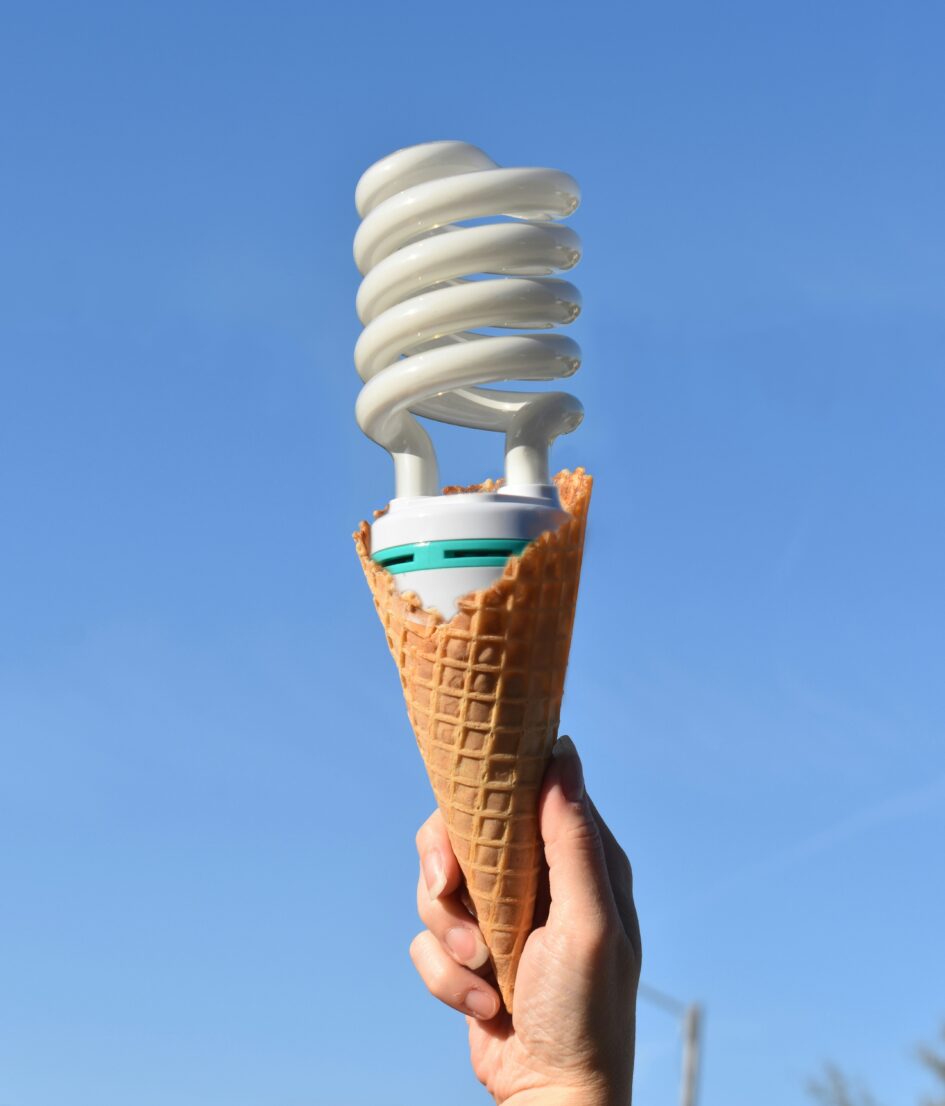
In society and schools today, art is often put on the back burner for things that are considered to be more important. However, that means there are less opportunities to develop our creativity and imagination. Creativity and imagination in art provides us with an outlet to express complex emotions or ideas, connect to ourselves, and develop important mental and emotional skills. Many people say they aren’t “good” at art, but there is no such thing, that’s what makes art so wonderful! “Good” art is any art that you put real care, thought, and effort into. It often tells a story, feeling, idea, or message, but that could look like anything! Even a canvas painted in all one colour can have a feeling behind it.
Surrealism is an art method that encourages us to release ideas from our subconscious mind, like wacky things we would see in a dream. Juxtaposition is the act of putting two things close to each other to compare how alike or different they are. Therefore, using juxtaposition in surrealism means combining weird, random, or mismatched elements to create art that lets your imagination run wild, creating something almost dreamlike. For example, a fish flying in outer space with a space helmet, animals in the jungle having a coffee meeting, or a dog in clothes walking a human. Below, you will find informative videos to get a better understanding on Juxtaposition and Surrealism. There are also some art examples to look at, a quick check-in to see what you’ve learned, and a Canva slideshow where you can upload your own work! Because this art form is so open to out-of-the-box ideas and has very little logical rules, it’s one of the best art forms for developing our imagination. Once we have imaginative skills, we can excel not only in art, but in many other areas of our life.
Informative Videos on the use of Juxtaposition and Surrealism
Check out these videos to get a better feel for Surrealism and Juxtaposition. If you’re still curious or want to see more examples, please go ahead and do your own explorations on YouTube or Google!
Video Overview: What is Surrealism | Tate Kids
- The Basics: Surrealism started in the 1920s by a writer named Andre Breton. He was obsessed with dreams and the weird thoughts we have without even knowing it.
- Inspired by Dreams: Think of Salvador Dali’s work (weird, trippy landscapes).
- Automatism: Making art without thinking. If you doodle mindlessly in your notebook, you’re a surrealism artist!
- Today: You can find surrealism everywhere like video games, movies, artwork, advertisements, and more!
Video Overview: Juxtaposition | Relationship Psychology
- The Weird Mix: Juxtaposition is just putting two things together that don’t belong (like René Magritte’s painting of a man with an apple for a face).
- Why Juxtaposition: It makes you look twice. It forces you to think about “hidden meanings” instead of just seeing a normal picture.
- Legacy: Magritte continues to inspire modern artists who want to break the rules of how things should look.
YouTube Video: What is Surrealism?
Video Overview: What is Surrealism? | @Artisgreatoo
- Cool Visuals: A quick look at a bunch of surrealist art.
- A Quote: Salvador Dali said surrealism is “destruction of shackles limiting our vision”. Basically, it lets you see the world in limitless new ways.
Examples of Art and Artists who use Juxtaposition in Surrealism
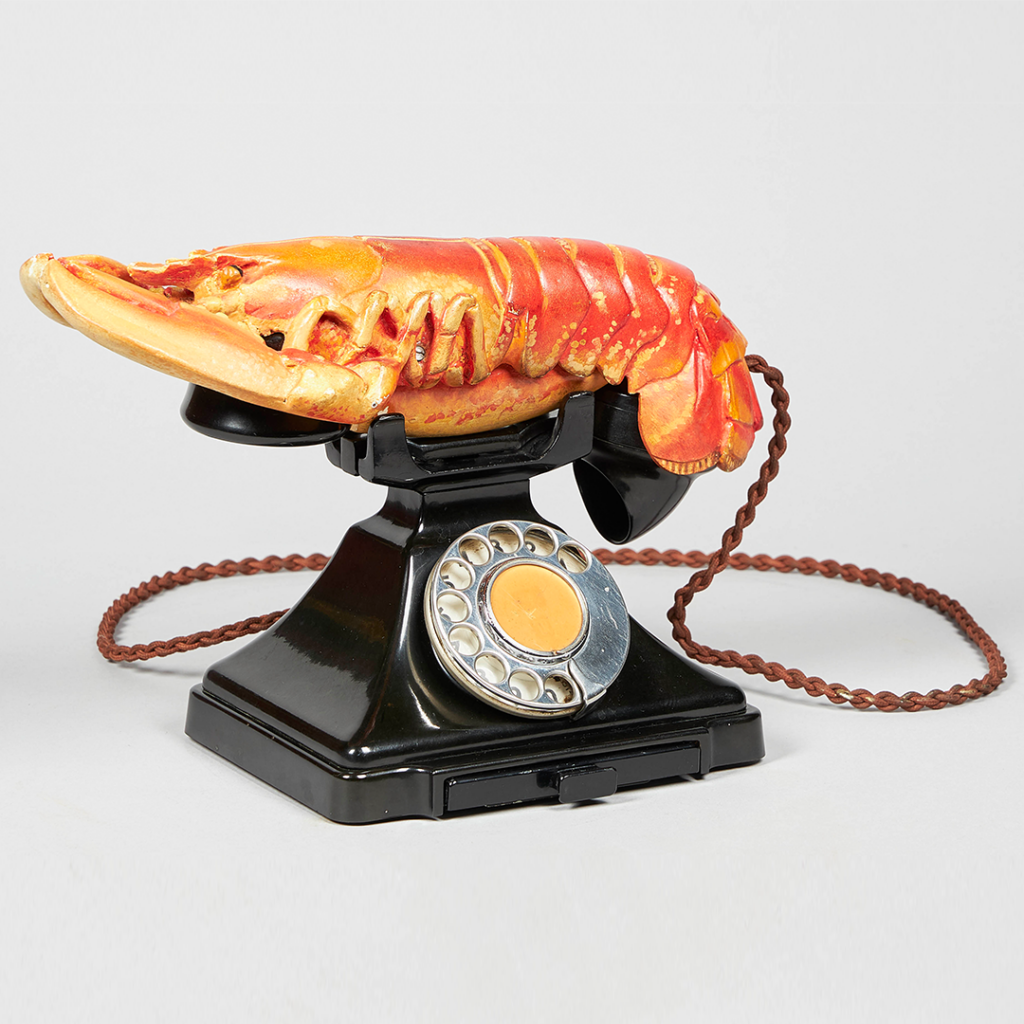
Salvador Dalí: Lobster Telephone (1936)
This famous surrealist sculpture shows a lobster placed on top of a telephone where the receiver would normally be. Dalí combined two objects that normally have nothing to do with each other to create something strange and dreamlike. This surprising pairing is an example of juxtaposition because it puts unrelated objects together in a way that makes viewers question reality and think about deeper meanings.
Source:
Dalí, S. (1936). Lobster Telephone. © Fundació Gala-Salvador Dalí.
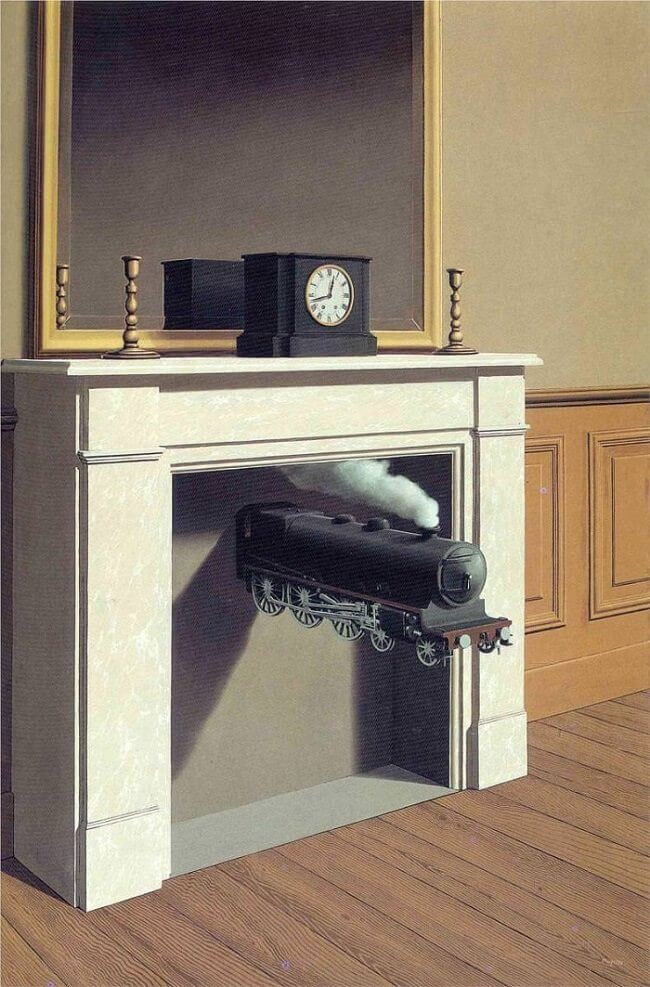
René Magritte: Time Transfixed (1938)
In this surrealist painting, a steam train appears to be coming out of a fireplace inside a quiet living room. Magritte placed something powerful and moving (a train) inside a calm indoor space where it clearly does not belong. This unexpected combination of objects is a strong example of juxtaposition because it creates a mysterious and dreamlike scene that challenges the viewer’s expectations.
Source:
Magritte, R. (1938). Time Transfixed. © René Magritte Estate.
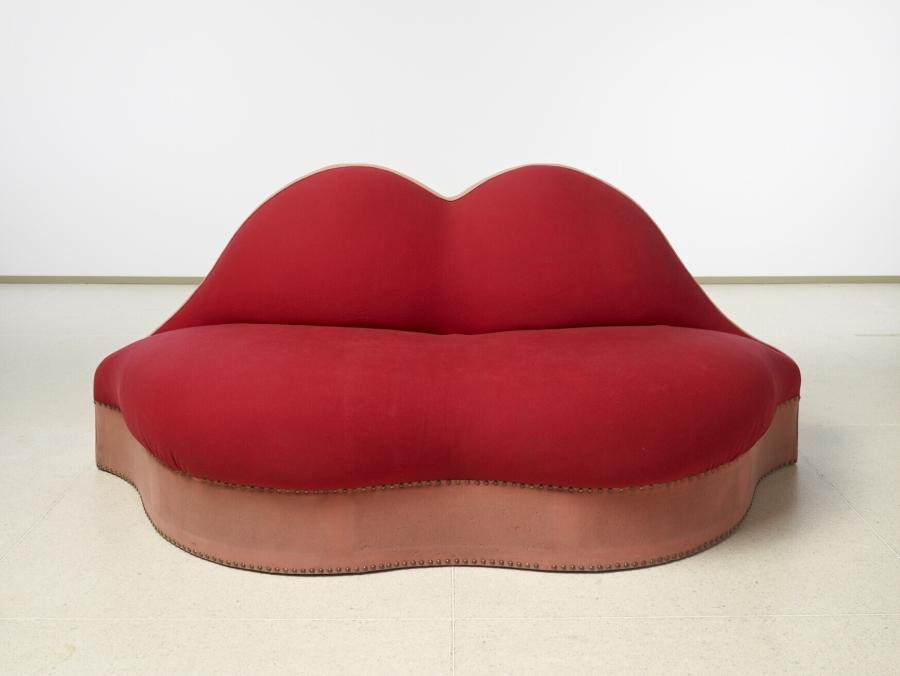
Salvador Dalí: Mae West Lips Sofa (1937–1938)
Dalí designed a surrealist sofa shaped like the lips of actress Mae West. Instead of a normal couch, he turned a piece of furniture into a giant pair of lips. This unusual combination of a human feature and a functional object shows how surrealist artists used juxtaposition to transform ordinary items into strange and imaginative works of art.
Source:
Dalí, S. (1937–1938). Mae West Lips Sofa. © Salvador Dalí / Edward James.
Cody Lecoy: Mycelium (2023-2024)
Lecoy shows how all living things are connected, just like the underground fungi network. Lecoy uses surrealism by blending natural forest shapes with dream-like patterns. The use of juxtaposition is present with Lecoy placing growth next to manmade items to show the contrast of wildness and the structure of our world.
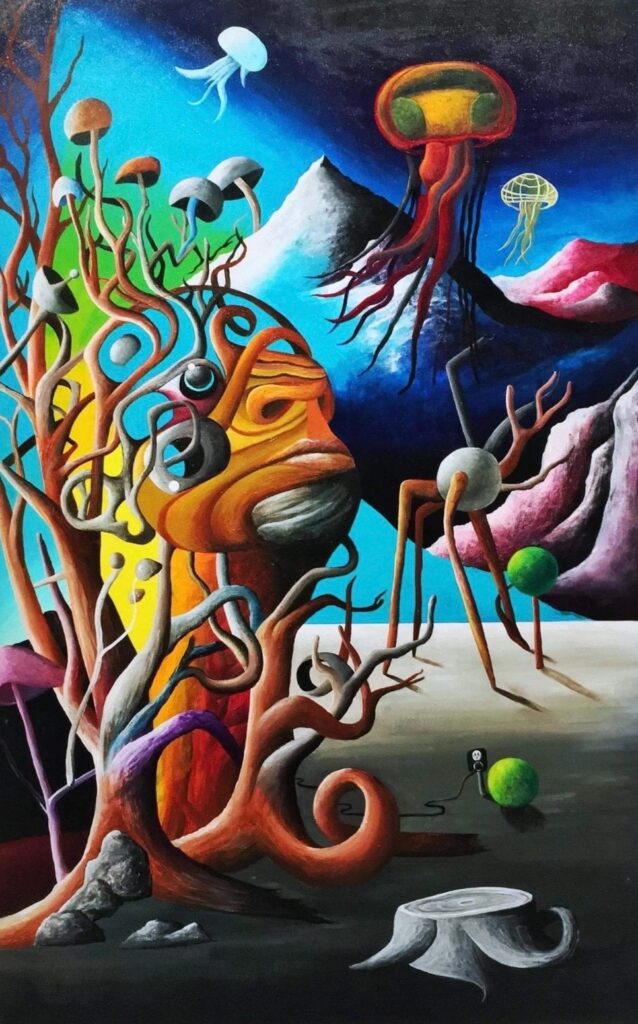
Source:
Lecoy, C. (n.d.). Mycelium [Painting]. Cody Lecoy Arts.
Frida Kahlo: La Venadita (1946)
Frida Kahlo is known for her surrealist and dream-like art. La Venadita is a powerful self-portrait symbolizing her physical pain, emotional despair, and lack of hope following a failed spinal surgery. It depicts a young deer with her own face, hunted and pierced by arrows, representing a feeling of being trapped by chronic suffering.
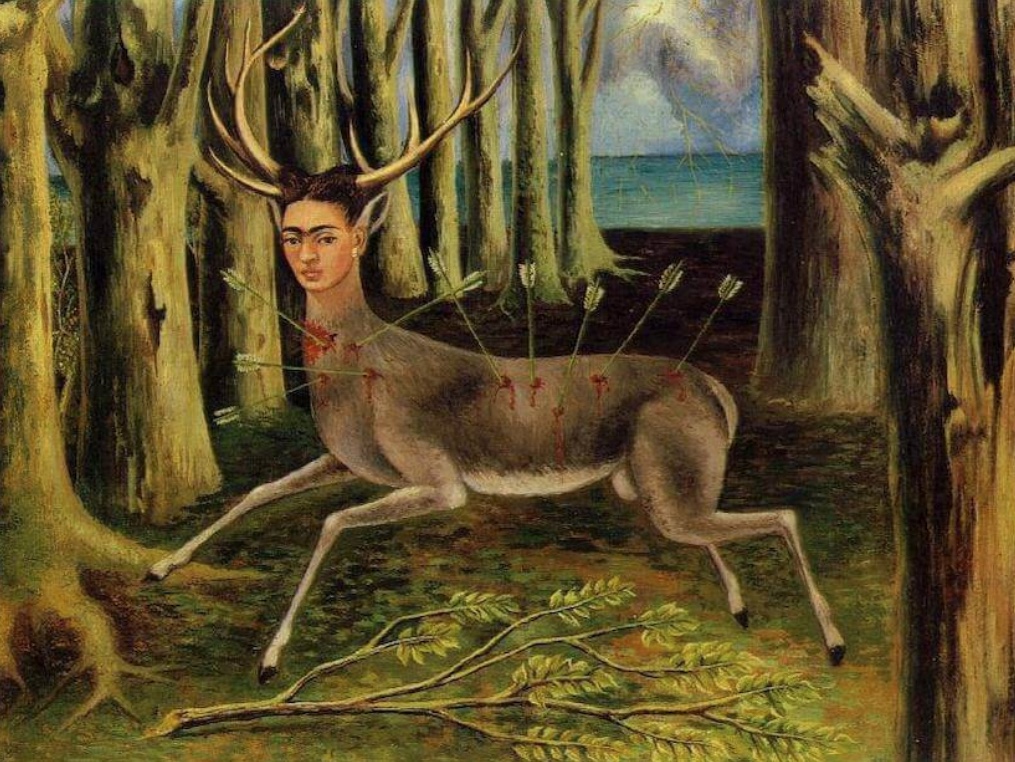
Source:
Kahlo, F. (1946). La Venadita [Painting]. © Frida Kahlo Museums Trust.
Formative Check-In
This quick formative check-in is designed to help the teacher check your understanding of surrealism and juxtaposition before starting your artwork. If there are any areas you’re struggling with, this form will help us guide you in the right direction. This is not graded and therefore nothing to stress about.
Google Form: Formative Check-In: Juxtaposition and Surrealism
Summative Text
- Below is a link to a shared class Canva slideshow.
- Either by hand (drawing, painting, collage, etc.) or digitally (directly on the Canva slide or through a different platform of your choice), create one piece of art using juxtaposition in surrealism.
- Put your art on one of the empty slides. If you did it by hand or through a platform outside of Canva, put a picture or screenshot of your art on one of the slides. In the notes section of your slide, write your name, specify you’re the artist, and explain the meaning behind your art. For example, Artist Brynn: _________.
- When you’re finished on your slide, scroll through the different slides to see your peers’ work. Pick 3 that speak to you, and using the ‘notes’ function on those slides, provide constructive feedback along with your name. For example, Anna: _________.
‘Surrealism/Juxtaposition Art’ Canva Link
User Note: You can keep using this Canva link for review and feedback. Please keep in mind that all comments and art are monitored. Anyone using the resource inappropriately will be removed from the project immediately.
References
Dalí, S. (1936). Lobster Telephone. Museum für Kommunikation, Frankfurt.
Dalí, S. (1937-1938). Mae West Lips Sofa. Surrealist sculpture commissioned by Edward James.
Kahlo, F. (1946). La Venadita. Museo Frida Kahlo.
Lecoy, C. (2023-2024). Mycelium. Bill Reid Gallery.
Magritte, R. (1938). Time Transfixed. Art Institute of Chicago.
Leave a Reply
You must be logged in to post a comment.