
Photo by Tim Mossholder on Unsplash
Introduction
I think one of my favourite parts about being in the education field is learning about learning theories. Not only does it help me as an educator when designing learning experiences, but it highlights why I was successful or unsuccessful during my own learning experiences. Learning about the different theories and principles this week allowed me to see that it’s not just about the different media to choose from, but the science behind how, why, and when to choose them.
Theories, Ideas and Principles That Felt Intuitive
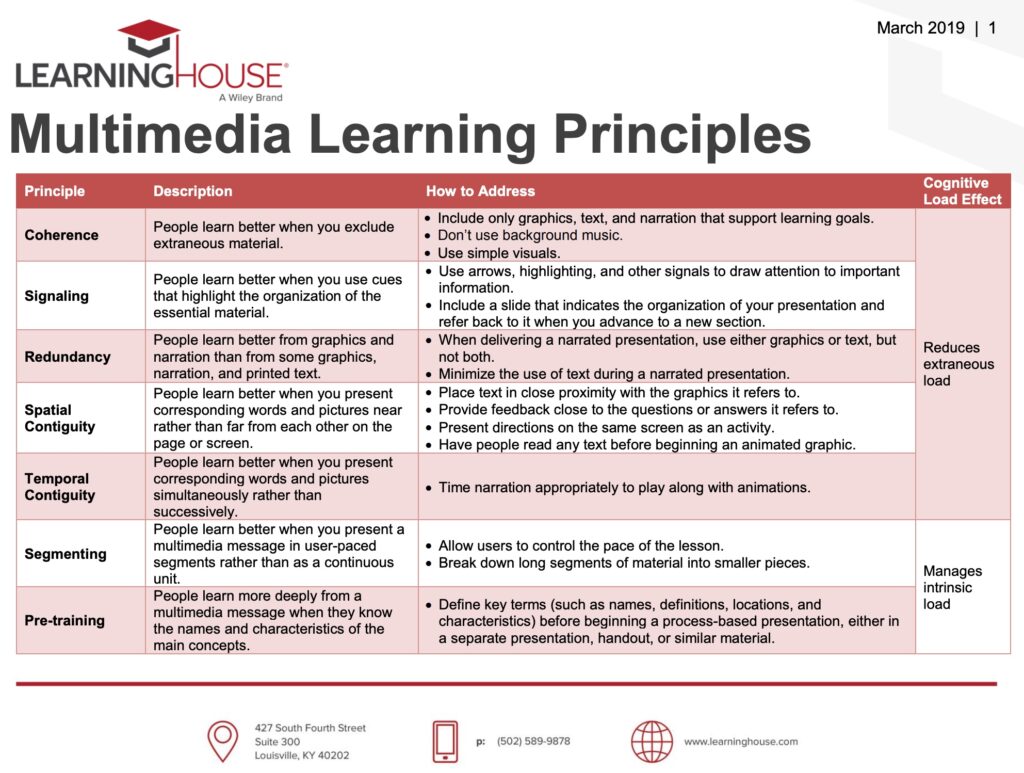
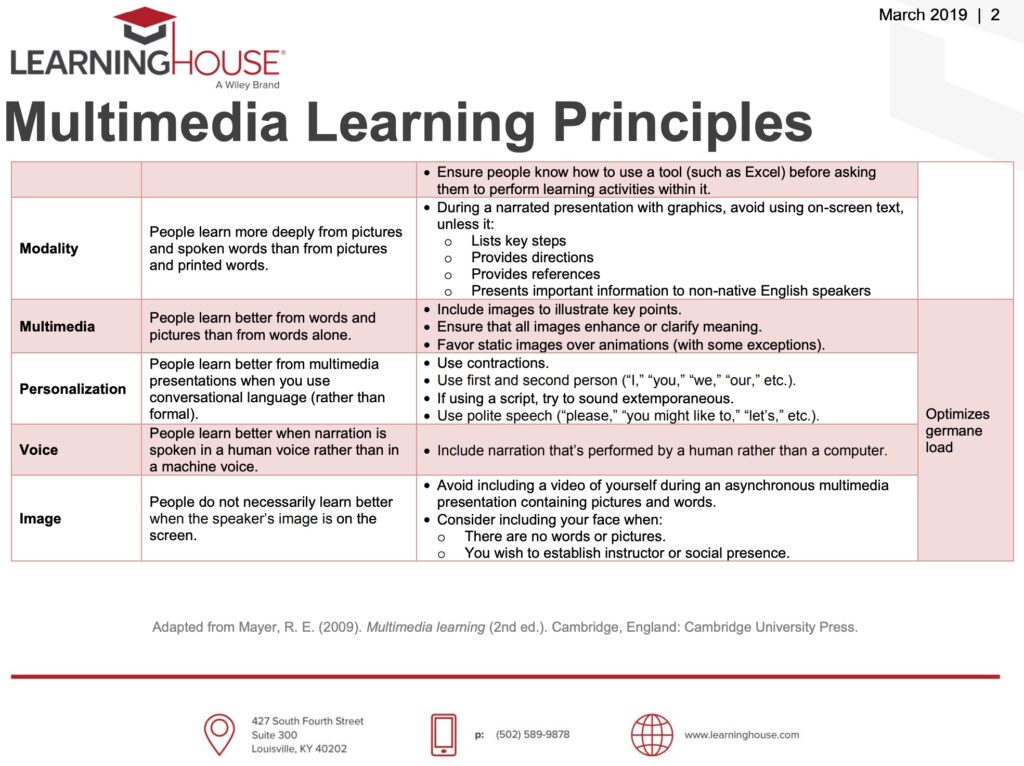
Dual coding theory was the most interesting and felt very intuitive to me. As a learner, I find it so much easier when audio or text is paired with a relevant visual. As an educator, I find it much easier to explain concepts when both me and my students have a visual to accompany my explanation. Prior to this week, I did not know that they were stored separately and can be paired without increasing cognitive load (Wiley University Services, n.d.). Another thing I found interesting was intrinsic, extraneous, and germane load. When I’m experiencing cognitive overload, which now that I’m looking back, was caused by poor design, I get really overwhelmed both physically and mentally. This causes my brain to shut down and I cannot process or store new information during germane processing/load.
Some other principles that were very intuitive to me were the Signaling Principle, Spacial Continuity Principle, Segmenting Principle, Multimedia Principle, Personalization Principle, and the Voice Principle.
Principles That Surprised Me
One principle that surprised me was the Image Principle. When I watch informative videos or lectures, I prefer when there is a talking head. It surprised me to learn that it does not add to the learning and may even distract from the message of the presentation (Wiley University Services, n.d.).
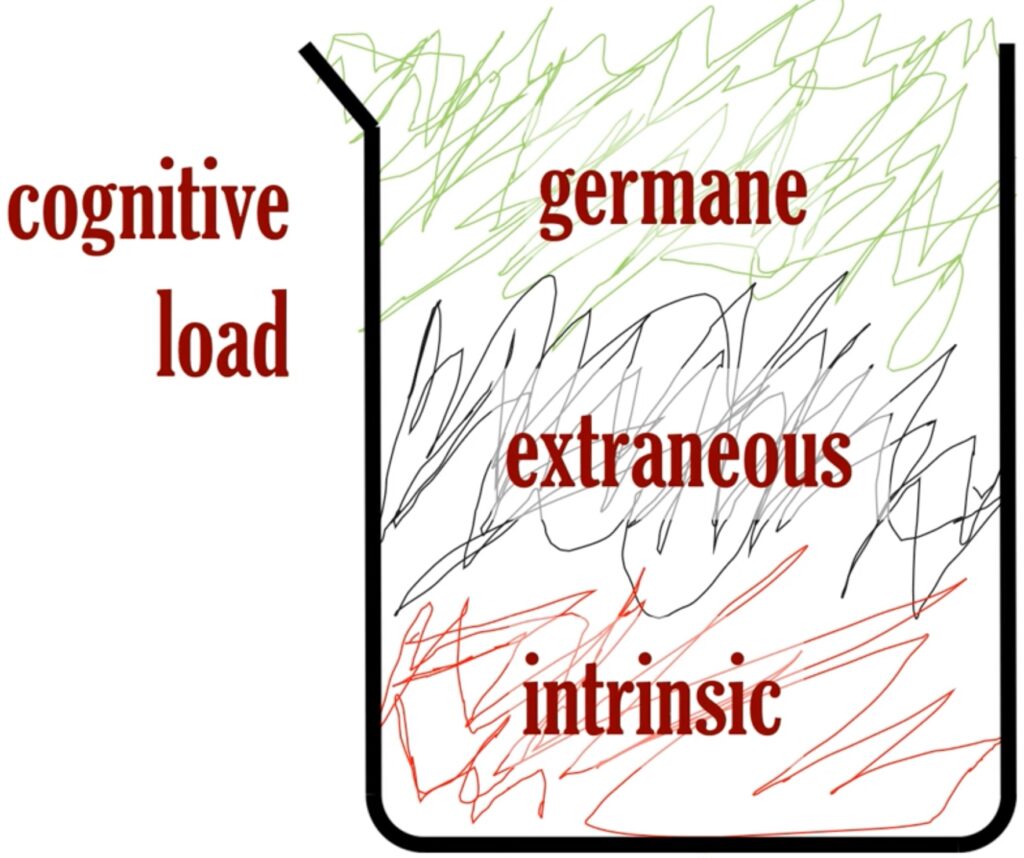
The Coherence Principle surprised me at first because I always thought that by adding these decorative images, gifs, or music, I was making my lesson more engaging. Now that I understand the Cognitive Load Theory, I understand that these may add to the learners load and make it more challenging to store information during german processing (Wiley University Services, n.d.).
The Redundancy and Modality Principles also surprised me at first, but made sense after some personal reflection. Prior to this year, I have always believed that I should include as many learning “styles” as I can in each lesson, as some students need visuals, some need audio, and some prefer text. It wasn’t until my EDCI 335 course when I learned that the five learning “styles” has been debunked, so remembering this helped me understand why the Redundancy Principle and Modality Principles are true. Now that I am reflecting on my own experience as a learner, I do find it easier to hear a verbal explanation paired with a visual, as I can extract what I feel is important for my understanding, without increasing my cognitive load.
How My Learning Design Will Change
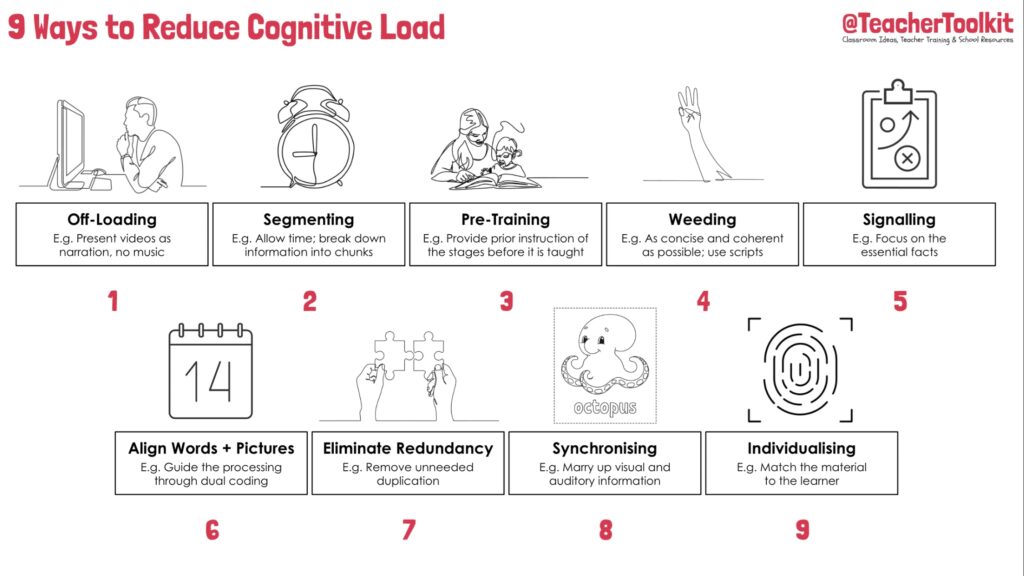
There are many principles that I had subconciously been using already. However, there are some I now want to put more effort into and some I have never tried at all. To make my learning design better and to ensure I’m not cognitively overloading my students, I now plan to follow the Cognitive Load Theory and it’s principles, especially the Coherence Principle, Signaling Principle, Redundancy Principle, Modality Principle, Personalization Principle, and the Temporal Contiguity Principle.
Leave a Reply
You must be logged in to post a comment.